September 19, 2025
While it might seem economical to cling to outdated technology, this approach often results in higher hidden costs. Relying on aging hardware and obsolete software can significantly drain your business's productivity, inflate expenses, and expose you to security threats.
Understanding the True Financial Impact
Outdated technology impacts your business in several critical ways. Slow-performing systems reduce your team's efficiency and delay project completion. Moreover, hardware failures can trigger unexpected downtime, disrupting your operations and affecting client commitments.
Security risks are another major concern. Unsupported software and hardware lack essential security patches, leaving your business vulnerable to cyberattacks. Hackers exploit these weaknesses to access sensitive data, putting your company at risk of data breaches and compliance failures. Upgrading to current technology is essential to safeguard your business and meet regulatory standards.
Recognizing When It's Time to Upgrade
Watch for these clear indicators that your technology needs an update:
1. Running Windows 10 or older versions.
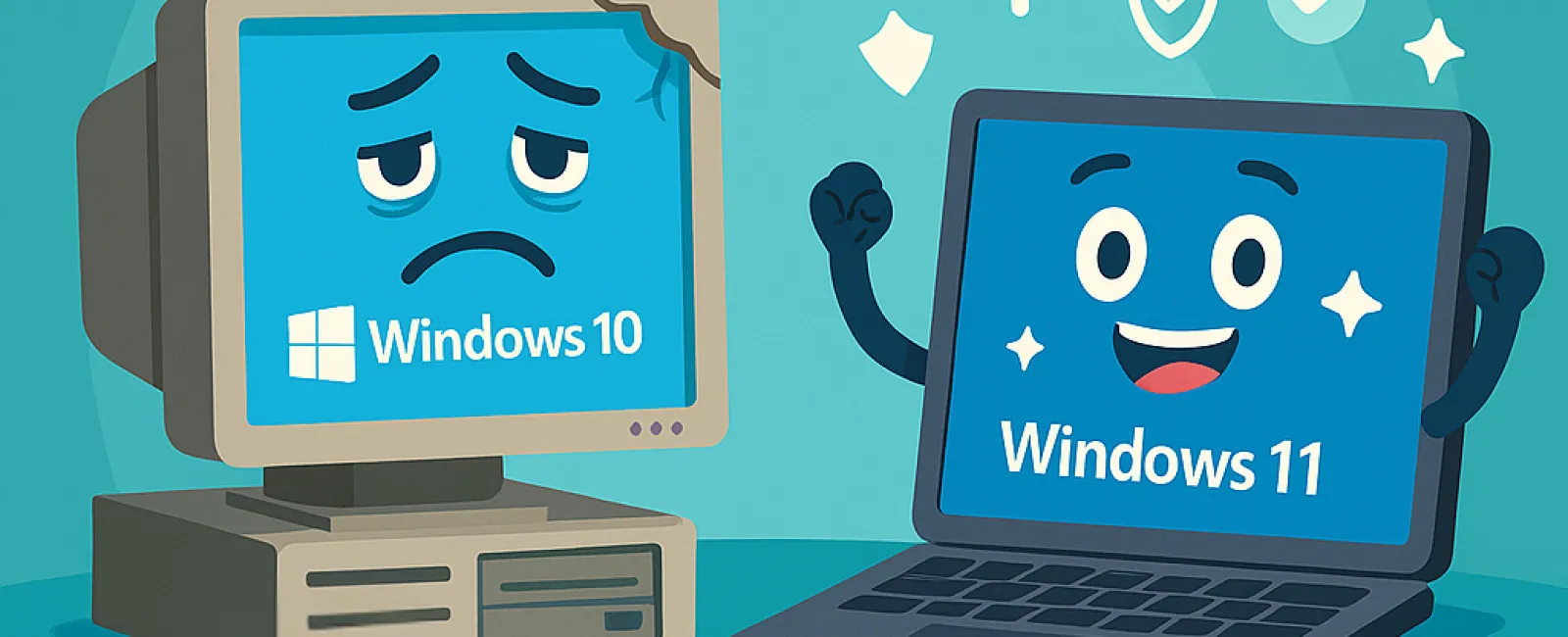
Microsoft will end support for Windows 10 in October 2025, which means no more security updates. Continuing with Windows 10 after this date exposes your business to serious cybersecurity and compliance risks. Begin planning your transition to Windows 11 now to stay protected.
2. Repeated IT support calls for the same issues.
Persistent crashes and slowdowns aren't just frustrating—they're signs your technology is failing. These problems drain productivity and increase downtime, costing your business valuable time and resources.
3. Software incompatibility with new tools.
Legacy software that doesn't integrate with modern mobile apps or cloud platforms limits your ability to adopt innovative solutions, serve customers efficiently, and grow your business.
4. Devices that hinder your team's efficiency.
Computers that take too long to start or freeze during critical tasks slow down workflows and waste time. Devices over three to five years old should be evaluated for performance and energy use to ensure they aren't dragging your team down.
5. Outdated security systems.
Firewalls and antivirus software that haven't been updated recently leave your business exposed to evolving cyber threats. Up-to-date security measures are vital to prevent ransomware and other attacks.
Worried about the cost of upgrading? While it may seem expensive upfront, holding onto outdated systems often leads to greater expenses from lost productivity, security breaches, and constant repairs. Fortunately, there are cost-effective, strategic upgrade options that keep your business running smoothly without breaking the bank.
Expert Support Every Step of the Way
If you need a trusted partner to guide you through technology upgrades and keep your systems current, reach out to our expert team. Schedule a FREE 10-Minute Discovery Call consultation where we'll outline the best steps to enhance your security, boost productivity, and optimize costs. Contact us at 702-745-9468 or click here to get started.